

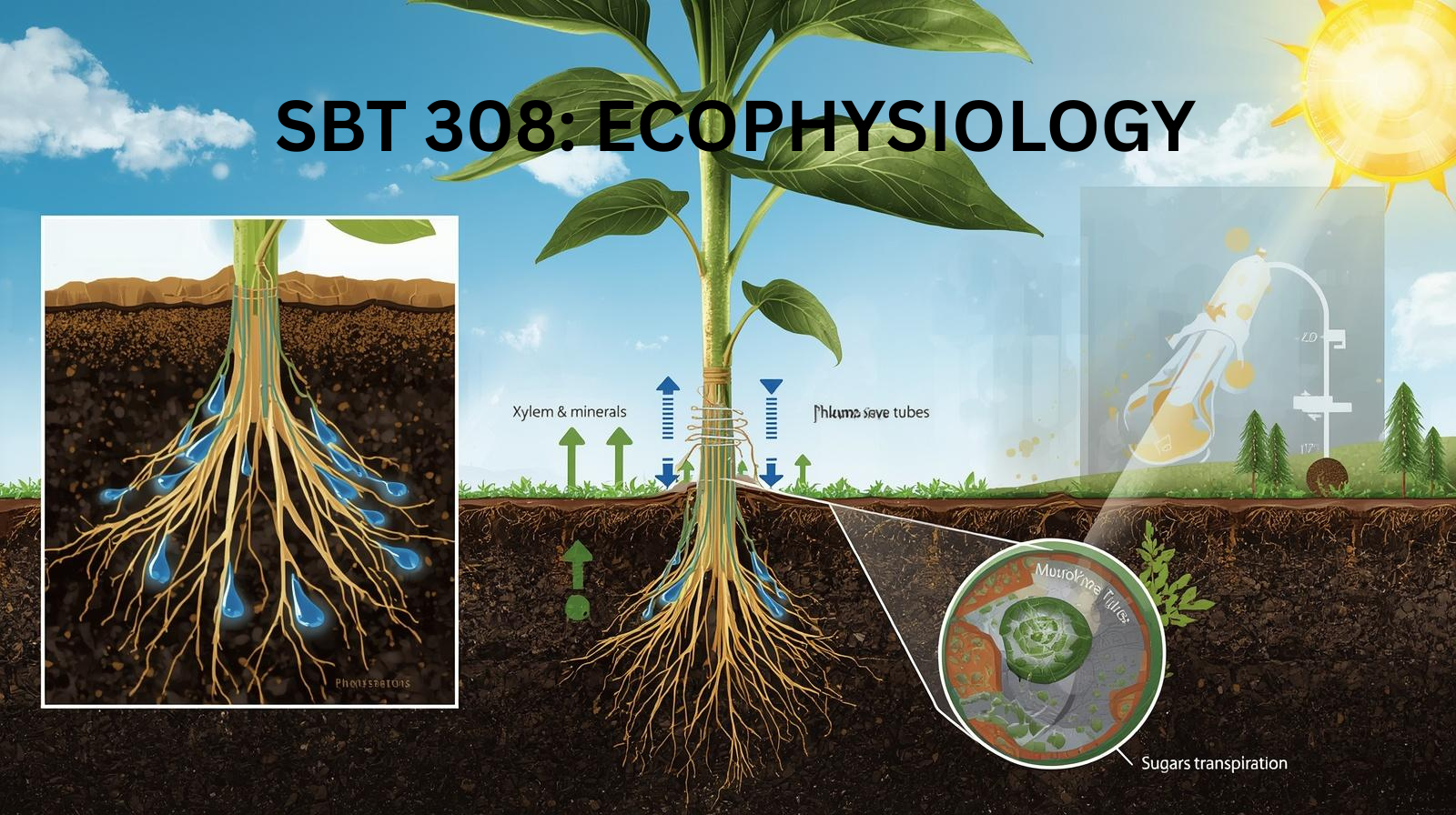
BT 308: Ecophysiology - Course Overview
Instructor: Dr. Benard Odhiambo
Course Description:
This course provides an in-depth exploration of the functional relationships between plants and their environment. It focuses on the internal physical and chemical processes that govern plant life, from the cellular level to whole-organism responses. Key areas of study include the movement of water and nutrients, plant metabolism, and the physiological mechanisms plants employ to withstand environmental stresses such as drought, salinity, and extreme temperatures. The course also covers mineral nutrition, including the essentiality, uptake, and metabolic roles of mineral elements, as well as the ecological and genetic factors influencing these processes.
Core Objectives:
The primary goal of this course is to enhance students' understanding of how plants function as living organisms. Students will investigate the chemical and physical processes associated with plant life, connecting internal plant activities with external environmental factors.
What You Will Learn:
By the end of this course, successful students will be able to:
-
Explain the hierarchical organization of plants from cells to organs.
-
Describe the physiological mechanisms behind water and nutrient uptake, transport, and food translocation.
-
Analyze how physical and chemical factors in the environment affect plant growth and development.
-
Identify the major effects and physiological roles of plant growth regulators (hormones).
Course Structure & Key Topics:
The course content is structured into nine main topics, with assessments integrated throughout:
-
Introduction to Ecophysiology
-
Plant-Water Relations: This foundational section covers the physical principles (imbibition, diffusion, osmosis) and key processes (transpiration, photosynthesis) critical for plant function.
-
Translocation: Focuses on the transport of food (sugars) through the phloem.
-
CAT 1
-
-
Plant Stress Physiology: Examines how plants respond to environmental stresses like water deficit, salt, light, and temperature extremes.
-
Mineral Elements: Discusses the essentiality, uptake, and transport of mineral nutrients.
-
Foliar Nutrition and Leaching
-
Mineral Metabolism and Deficiencies
-
CAT 2
-
-
Ecological and Genetic Aspects of Mineral Nutrition
-
Plant Response to the Environment
Learning Activities & Assessment:
Your understanding will be evaluated through a combination of theoretical and practical work:
-
Continuous Assessment Tests (CATs) (20%): Two CATs will assess your comprehension of the theoretical concepts covered in the first half of the course.
-
Practical Sessions (10%): Hands-on laboratory exercises will reinforce key concepts through experiments on imbibition, osmosis, plasmolysis, transpiration, and photosynthesis.
-
End of Semester Examination (70%): A comprehensive final exam will test your overall understanding of all course topics.
- Teacher: Dr. Benard Odhiambo