

Course Overview
SBT 410: PLANT PATHOLOGY
Instructor: Dr. Benard Odhiambo
Welcome to SBT 410: Plant Pathology!
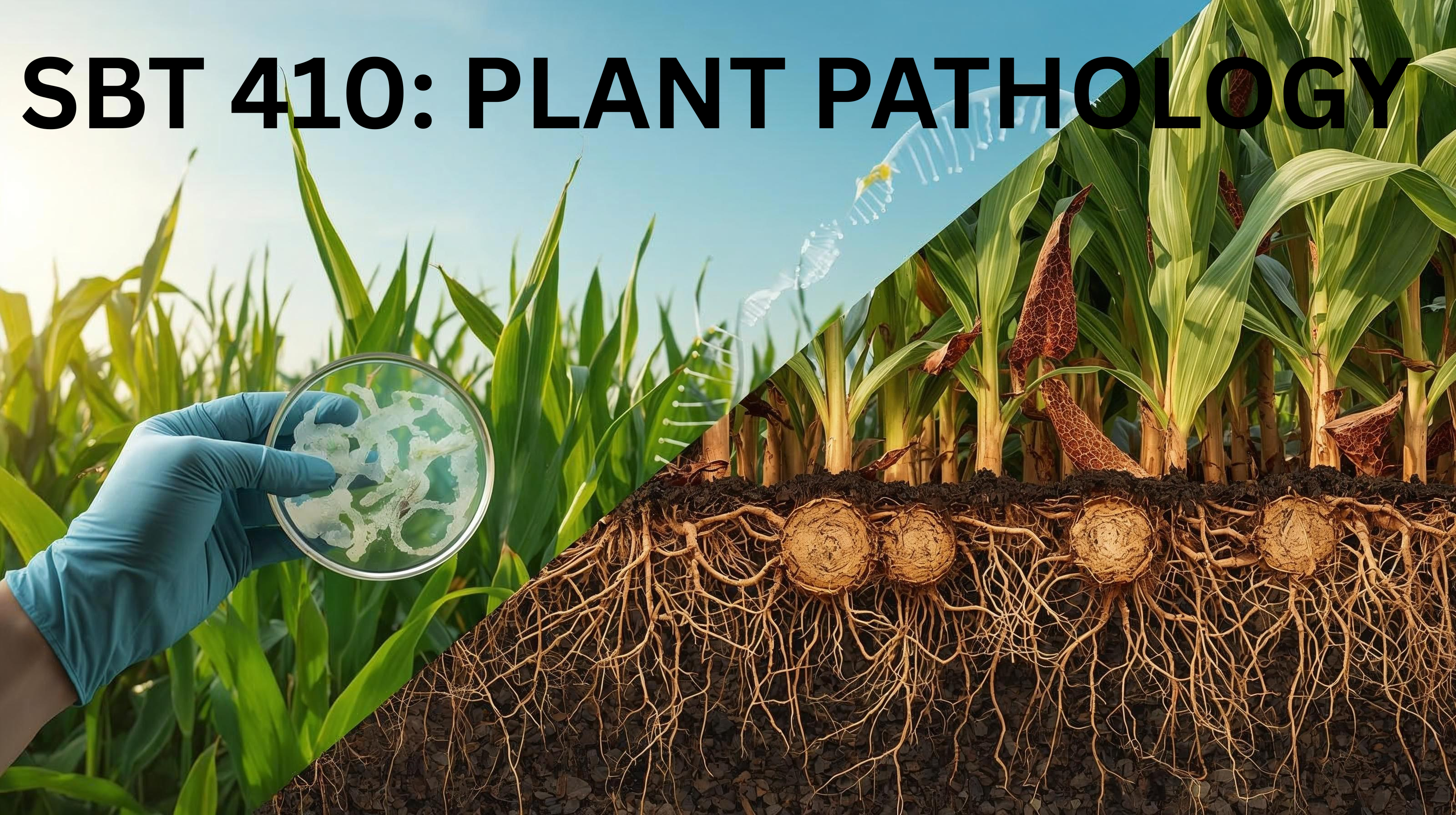
This course offers a comprehensive introduction to the fascinating and critical field of plant pathology—the study of plant diseases. As the global population rises and climate change intensifies, the health of our crops and natural ecosystems is more important than ever. This course will equip you with the fundamental knowledge and practical skills to understand, diagnose, and manage plant diseases, linking microscopic interactions to their profound impact on human affairs.
Over the semester, we will explore the dynamic relationship between plants and the diverse array of pathogens that threaten them. From the historical famines that have shaped civilizations to the modern principles of integrated pest management, you will gain a holistic understanding of the "disease triangle" (host, pathogen, environment) and how to disrupt it.
What You Will Learn:
Our journey through the course is guided by six core objectives. By the end of SBT 410, you will be able to:
-
Describe the fundamental concepts of what constitutes a disease in plants.
-
Identify the major principles that form the foundation of plant pathology.
-
Recognize the key etiological (causal) agents responsible for plant diseases.
-
Employ established methods to accurately diagnose and strategically manage a wide range of plant diseases.
-
Describe the key aspects of integrated pest management (IPM) as a sustainable approach to disease control.
-
Explain the significant impact of plant diseases on human societies, economies, and food security.
Course Structure:
The course is structured to build your knowledge progressively, from foundational concepts to complex management strategies. Key topics include:
-
Foundations: We begin with the history and significance of plant pathology, exploring the concepts, definitions, and causes of plant diseases, distinguishing between infectious (biotic) and non-infectious (abiotic) agents.
-
The Disease Process: You will learn about the stages of disease development, from inoculation and infection to pathogenesis and symptom expression. We will delve into disease physiology, including the roles of enzymes and toxins.
-
The Pathogens: A significant portion of the course is dedicated to the biology, classification, and disease-causing mechanisms of major pathogen groups, with a strong emphasis on:
-
Fungi
-
Prokaryotes (Bacteria and Phytoplasmas)
-
Viruses and Viroids
-
Nematodes
-
Parasitic Seed Plants
-
-
Diagnosis & Assessment: You will learn systematic methods for disease diagnosis and classification, as well as techniques for assessing disease severity and understanding the principles of epidemiology—how diseases spread in populations.
-
Host-Pathogen Interactions: We will explore the genetic basis of susceptibility and resistance, examining the dynamics of host-parasite interactions at the molecular and population levels.
-
Management: The course culminates in a study of the principles of plant disease management, integrating cultural, biological, genetic, and chemical methods within the framework of integrated pest management (IPM).
Learning and Assessment:
Your understanding will be assessed through a blend of theoretical knowledge and hands-on practical application:
-
Continuous Assessment Tests (CATs) (20%): Two CATs will be conducted throughout the semester to evaluate your grasp of theoretical concepts.
-
Practical Sessions (10%): These hands-on sessions are crucial for developing essential skills. Activities will include:
-
Identifying disease symptoms in plant specimens.
-
Conducting basic plant nematology research, including extracting nematodes from soil/plant tissues and staining roots for visualization.
-
Performing seed health testing methods, such as extracting and isolating fungi and bacteria from seeds.
-
-
End of Semester Examination (70%): A comprehensive final exam will assess your overall understanding of all course material.
Key Resources:
To support your learning, we will draw upon a range of classic and foundational texts in the field. Key references include:
-
Agrios, G.N. (2005). Plant Pathology (5th ed.). Elsevier Academic Press. (A core, comprehensive textbook).
-
Campbell, C.L. and Madden, L.V. (1990). Introduction to Plant Disease Epidemiology. Wiley Interscience.
-
Dropkin, V.H. (1989). Introduction to Plant Nematology (2nd ed.). John Wiley & Sons.
-
Maloy, O.C. (1993). Plant Disease Control: Principles and Practice. John Wiley & Sons.
-
Goto, M. (1992). Fundamentals of Bacterial Plant Pathology. Academic Press.
-
Sigee, D.C. (1993). Bacterial Plant Pathology: Cell and Molecular Aspects. Cambridge University Press.
I look forward to exploring the intricate and critical world of plant pathology with you. Let's work together to understand the battles beneath our feet and in our fields, and learn how to protect the plants that sustain us.
Dr. Benard Odhiambo
- Teacher: Dr. Benard Odhiambo