

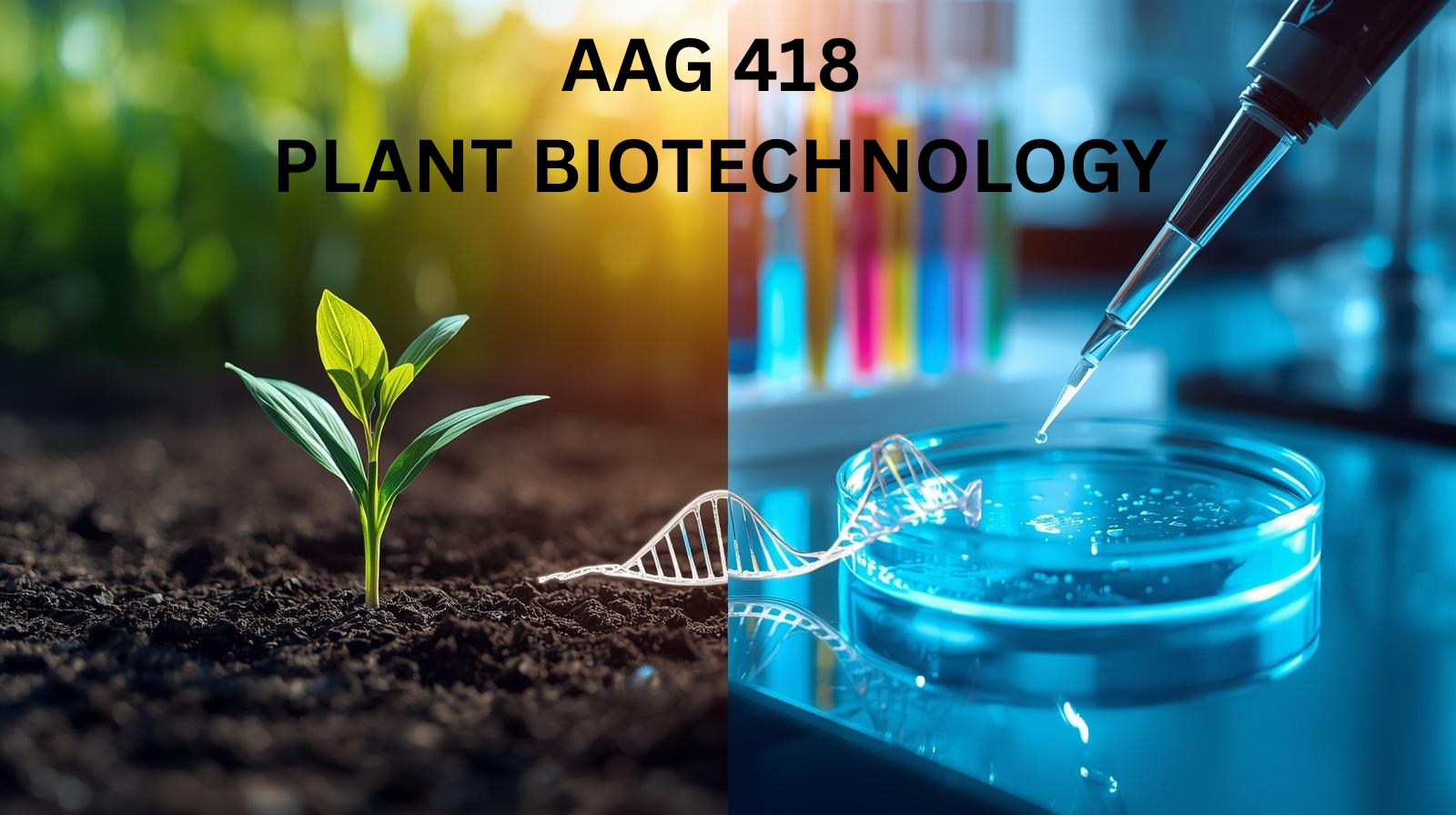
Course Code: AAG 418
Course Title: Plant Biotechnology
Instructor: Dr. Benard Odhiambo
1. Introduction and Scope
AAG 418: Plant Biotechnology is a comprehensive course designed to provide students with a thorough understanding of the principles, techniques, and applications of biotechnology in plant science. The course bridges the gap between classical plant biology and modern molecular techniques, exploring how genetic manipulation can be harnessed for agricultural and industrial progress. It begins with the foundational concepts of plant cell, tissue, and organ culture and progresses through advanced topics in molecular genetics, genetic transformation, and their practical applications. A critical component of the course also involves examining the broader societal, ethical, and ecological implications of plant biotechnology, including intellectual property rights and bio-safety.
2. Core Topics and Learning Objectives
The curriculum is structured to guide students from fundamental concepts to contemporary applications and debates. The key topics covered include:
- Topic 1: Foundations of Plant Biology and Culture. The course starts with an in-depth look at plant cell structure and function, the organization of plant tissues and organs, and the establishment of plant tissue culture systems. Students will learn the techniques and also critically evaluate the limitations of these in vitro methods.
- Topic 2: Introduction to Molecular Genetics. This section introduces the core concepts of molecular genetics, with a focus on the tools for genetic analysis and modification. It covers Recombinant DNA technology and the various genetic manipulation and purification techniques.
- Topic 3: DNA Cloning and Genetic Transformation. Students will explore the processes of DNA cloning and their manipulations. This leads into the study of genetic transformation, including the roles of key elements like gene vectors and promoters.
- Topic 4: Advanced Genetic Analysis and Engineering Tools. The curriculum covers essential marker genes and the concept of natural genetic engineering. Students will become familiar with pivotal molecular techniques such as:
- RAPD (Random Amplified Polymorphic DNA)
- PCR (Polymerase Chain Reaction)
- RFLP (Restriction Fragment Length Polymorphism)
- Advanced techniques like chromosome walking and DNA foot printing are also introduced.
- Topic 5: Cell Culture Mutants. This topic focuses on the generation, selection, and uses of cell culture mutants in plant breeding and genetic studies.
- Topic 6: Plant Somatic Cell Genetic Systems. This section delves into the genetic systems of somatic (non-reproductive) plant cells.
- Topic 7: Somatic Hybridization. A key focus is on techniques to fuse plant cells, specifically protoplast fusion and somatic hybridization, which allow for the creation of novel hybrid plants bypassing traditional sexual reproduction.
- Topic 8: Applications of Biotechnology. This topic connects scientific knowledge with real-world impact by covering the diverse industrial and agricultural applications of Biotechnology.
- Topics 9, 10 & 11: Implications and Future Directions. The course engages with critical non-scientific issues and future trends, including:
- Property rights and patenting issues of biotechnological innovations.
- The ecological bio-safety implications and potential impact of biotechnology on biodiversity.
- A review of current advances shaping the future of the field.
3. Learning Activities and Assessment
Student learning will be facilitated through a blend of theoretical and practical engagement.
- Practical Sessions (10% of final mark): The course emphasizes hands-on learning through several planned practical sessions designed to reinforce concepts from the lectures. These include:
- Microscopic examination of plant cell structure.
- Hands-on application of plant tissue culture techniques.
- Performing and analyzing the Polymerase Chain Reaction (PCR).
- Continuous Assessment Tests (20% of final mark): Two compulsory Continuous Assessment Tests (CATS) will be held to evaluate students' understanding of the material covered in the first two-thirds of the semester.
- End of Semester Examination (70% of final mark): A comprehensive final examination will assess the student's overall grasp of all topics covered throughout the course.
4. Recommended Reading
Students are encouraged to consult the following key texts for a deeper understanding of the subject matter:
- Introduction to Plant Biotechnology by Richard B. Flavell (2004).
- Introduction to Plant Genetic Modification: Transgenes and Transformation by Jim Giovannoni (2004).
- Plant biotechnology: A textbook by S.M. Paul Khurana & Narendra Kumar (2022).
In conclusion, AAG 418 offers a holistic and rigorous exploration of plant biotechnology, equipping students with both the technical knowledge and the critical perspective necessary to navigate this dynamic and impactful scientific field.
- Teacher: Dr. Benard Odhiambo